Unlocking the Tactile Aesthetics of Finger Prints Glyph Font in Modern Design
The search for authentic, organic textures in digital and print design often leads creators back to the natural world. Among the most personal and universally recognized patterns are those found on human fingertips and palms. The Finger Prints Glyph Font transforms these unique biological signatures into a versatile, scalable design asset. This massive pack of glyphs offers designers, educators, and hobbyists a direct way to incorporate the intricate ridges of fingerprints and palm prints into any project. Rather than relying on generic texture overlays or stock photography, this font-based approach provides precision, flexibility, and a level of detail that feels both forensic and artistic.
What Makes Finger Prints Glyph Font a Distinctive Design Resource
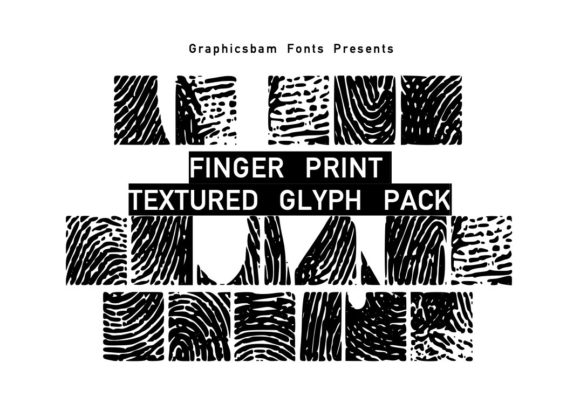
At its core, Finger Prints Glyph Font is not a conventional typeface for writing sentences but a curated collection of glyphs representing fingerprint and palm print textures. Each glyph corresponds to a different finger or palm region, covering the full range of loop, whorl, arch, and composite patterns found in human dactylography. This means that instead of pasting a generic fingerprint image, a designer can type a specific print pattern directly into their document, scale it without loss of quality, and manipulate it as vector art. For professionals working in forensic education, identity security, or natural-themed branding, this resource bridges the gap between scientific accuracy and creative expression. The pack includes dozens of distinct prints, allowing for variation and authenticity in projects that require multiple unique identifiers.
Key Characteristics of the Finger and Palm Print Glyph Pack
Understanding the characteristics of this glyph font helps users harness its full potential. The most notable feature is the high-resolution rendering of ridge details. Each glyph captures the minutiae points—the bifurcations, ridge endings, and dots that forensic analysts use for identification. Beyond mere aesthetics, these details serve educational and practical purposes. The glyphs are provided in clean vector format, which means they can be scaled from a tiny icon on a mobile interface to a large poster backdrop without pixelation. The pack covers both finger and palm regions, offering larger surface areas for projects that need a more expansive textural impact. Color and gradient can be applied easily because the glyphs are essentially outline or filled vector shapes, compatible with any design software that supports OpenType features. Many versions of the font also include alternate characters, allowing users to cycle through different print styles for variety.
Advantages Over Standard Texture Libraries
Traditional texture libraries often come as raster images—JPEG, PNG, or PSD files—that require careful masking, layering, and resolution management. Finger Prints Glyph Font eliminates these pain points by treating each print as a typeable character. This approach offers several advantages:
- Scalability without degradation: Because the glyphs are vector-based, zooming in close reveals crisp ridge detail rather than blurry pixels.
- Easy integration into existing workflows: You simply change the font in a text layer, type a letter, and the corresponding fingerprint appears. No importing, clipping, or resizing.
- Character map navigation: The glyphs are mapped to keyboard keys, making it easy to switch between different prints by pressing a different letter. This speeds up iterative design.
- Small file footprint: A single font file contains dozens of prints, whereas a library of high-resolution texture images would take up significant storage and loading time.
- Consistent styling across assets: All prints share the same line weight, style, and quality, ensuring a cohesive look in a project.
For educators creating forensic science worksheets or crime scene reconstruction diagrams, this consistency matters. Students can see exactly how ridge patterns differ without being distracted by varying image quality or lighting conditions.
Real-World Applications Across Diverse Fields
The versatility of Finger Prints Glyph Font extends far beyond typical font usage. In forensic education, instructors can quickly generate custom handouts with multiple print examples for classification exercises. Instead of collecting real prints from volunteers, which raises privacy concerns, educators can type a set of glyphs representing arches, loops, and whorls, and discuss their class characteristics without needing actual biometric data. This makes the learning process both ethical and efficient.
In the realm of identity and security design, the fingerprint glyphs are invaluable for prototyping user interfaces. Login screens that feature animated or static fingerprint icons can be created by typing a single glyph, scaling it, and adding color overlays. For branding packages that emphasize uniqueness or personalization, using actual fingerprint patterns as decorative elements adds a layer of meaning. A logo for a security company, for instance, could incorporate a whorl pattern from the font, immediately communicating trust and identification without relying on clichéd padlock imagery.
Craft and hobbyist projects benefit tremendously from the tactile, organic nature of these glyphs. Scrapbook pages, custom greeting cards, wedding invitations with a natural theme, and even textile patterns can incorporate palm prints as repeating motifs. Because the glyphs are easy to resize and rotate, a hobbyist can create a seamless fabric pattern using multiple prints arranged in a grid. The effect is both modern and organic, appealing to those who value handmade aesthetics augmented by digital tools. Artists have also used the glyphs as base textures for digital paintings, stamping them onto layers and then blending them with brushes to create realistic skin textures or aged paper effects.
In forensic research presentations, the font allows for clean, reproducible figures. Researchers can embed exact print patterns into their manuscripts without worrying about image resolution in print. The glyphs serve as precise visual references for describing analysis techniques, from primary classification to minutiae matching.
Another emerging use case is in accessible design. For individuals with visual impairments, tactile graphics can be created by embossing or printing the glyphs in raised format. The consistent ridge structure of the font makes it easier to interpret by touch compared to irregular sample images. This application is still experimental, but it highlights the potential of glyph-based fonts beyond screen-based visuals.
Considerations for Effective Implementation
While Finger Prints Glyph Font offers remarkable flexibility, achieving the best results requires attention to a few practical considerations. The glyphs are detail-rich, so they work best when printed or displayed at a reasonable size. Using them as tiny icons (below 10pt) may cause the ridge details to become too dense to read, undermining the forensic realism. For screen use, a minimum size of 24 to 36 pixels is recommended to preserve the visual texture. On larger prints, the glyphs can handle sizes exceeding 200pt without quality loss, making them suitable for posters or wall graphics.
Color choice greatly influences the perceived mood. Black or dark gray on a white background mimics traditional ink prints and is ideal for official or scientific documents. For creative projects, experimenting with metallic inks, foil stamping, or gradient fills can transform the glyphs into decorative elements. Because the ridges are fine, high-contrast color schemes tend to work best. Pastel on pastel may wash out the detail.
Pairing the fingerprint glyph font with appropriate body fonts is also important. Clean sans-serif typefaces like Helvetica, Arial, or Open Sans complement the organic detail without competing for attention. For a more forensic or archival feel, a monospaced font can be used alongside the glyphs in explanatory captions. Avoiding highly decorative fonts nearby prevents visual clutter.
Layering multiple glyphs—for instance, overlaying a palm print with a smaller fingerprint—can create depth but must be done carefully to avoid obscuring critical ridge details. Using opacity adjustments or blending modes in design software helps maintain legibility.
Practical Workflow Integration for Designers and Hobbyists
Integrating Finger Prints Glyph Font into a typical design workflow is straightforward. After installing the font, users open their preferred design application (Adobe Illustrator, Photoshop, InDesign, Affinity, or even Canva using a custom font upload). Create a text layer, select the Finger Prints Glyph Font from the font menu, and type the letter that corresponds to a specific print. Most font packs come with a cheat sheet mapping characters to prints. For example, the letter 'A' might produce a loop pattern, while 'B' yields a whorl. Letter case variations often provide different prints, doubling the size of the pack.
For repeated use across a project, designers can save commonly used prints as graphic styles or symbols. This is especially helpful when creating a set of mock identities for a design prototype. By typing a different letter each time, you generate a new print instantly, saving the effort of manually altering a raster texture. The font also supports kerning and tracking adjustments, so spacing between multiple glyphs can be fine-tuned for a rhythm that suits the layout.
Hobbyists who work with paper crafts can print the glyphs directly from a word processor. After typing the desired prints, they can adjust the font size to match the project scale, print on textured paper, and cut out the shapes for decoupage or stamping. Because the glyphs are clean vectors, the outlines remain sharp even on porous materials.
The Future of Biometric-Inspired Typography in Design
The rise of glyph-based fonts like Finger Prints Glyph Font signals a broader shift toward incorporating natural, biometric elements into everyday design. As digital interfaces become more ubiquitous, the desire for organic textures and human-centric motifs grows. Fingerprints, in particular, carry a universal meaning of identity, uniqueness, and security. This font makes that symbolism accessible to anyone with a keyboard, democratizing a visual language that was once reserved for forensic specialists or high-end security designers.
Looking ahead, we can expect more specialized glyph packs that cover other biometric markers—perhaps iris patterns, voice waveforms, or even DNA sequences. The model established by the fingerprint and palm print collection demonstrates how something as complex as a biometric identifier can be packaged as a simple, scalable font. For educators, this means richer teaching materials. For designers, it means a new vocabulary of textures that are both meaningful and visually engaging. For hobbyists, it opens the door to creating personalized crafts that incorporate elements of their own identity.
The ability to type a unique pattern and instantly see it replicated across a page has profound implications for how we think about typography and texture. No longer are organic patterns confined to static images; they become dynamic, editable, and responsive components of a design system. Finger Prints Glyph Font stands as a prime example of this evolution, offering a massive pack of glyphs that serve not just as decoration but as conduits for meaning, accuracy, and tactile beauty. Whether used in a classroom, a courtroom, a studio, or a craft room, these glyphs bring the intricacy of human touch to the forefront of visual communication.
For creators who value authenticity and precision, this font is more than a novelty—it is a functional tool that respects the complexity of its subject matter. By treating each fingerprint as a glyph worthy of its own character, the pack honors the individuality that each print represents. And in a world saturated with generic visuals, that kind of deliberately crafted, personally resonant texture is a rare and valuable asset.