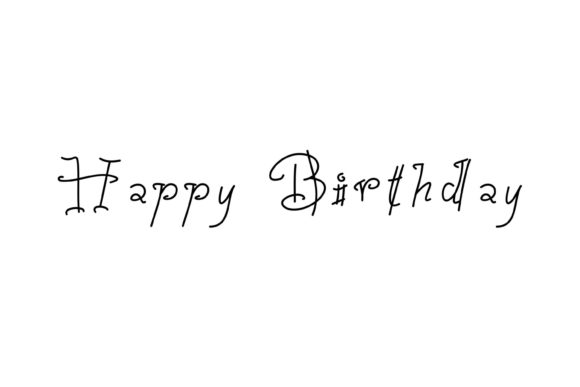
Happy Birthday Font: A Handwritten Font for Versatile Design
If you’ve spent any time browsing font libraries, you’ve likely come across the Happy Birthday Font. Despite its name, this typeface isn’t just for birthday cards. It’s a cute and simple lettered handwritten font that brings a warm, personal feel to almost any project. Whether you’re a professional designer, a small business owner, or someone who enjoys creating for fun, this font can become a reliable tool in your creative toolkit. Its charm lies in its approachable style — it looks like it was penned by hand, yet it’s consistent enough to use in serious design work. In this article, we’ll explore what makes the Happy Birthday Font worth considering, where it shines, and how you can put it to good use without falling into common pitfalls.
What Makes Happy Birthday Font Stand Out?
Handwritten fonts come in many flavors, from messy and aggressive to elegant and refined. The Happy Birthday Font falls on the cheerful and friendly end of the spectrum. Its letterforms are rounded, slightly irregular, and full of personality. The uppercase letters have a playful bounce, while the lowercase keeps a consistent x-height that aids legibility. It’s not trying to look like calligraphy or mimic a rigid script — instead, it feels like someone wrote your message with a fine marker on a sunny afternoon.
Key characteristics include:
- Playful but readable: The font maintains clarity even at smaller sizes, so you can use it for body text or headlines without losing meaning.
- Warmth and approachability: Curved terminals and slight unevenness give it a human touch that standard serif or sans-serif fonts lack.
- Versatile spacing: The default letter spacing is generous, making it suitable for both short phrases and longer sentences.
- Simple design: There are no extra flourishes or swashes, which means it pairs well with other fonts and doesn’t overwhelm the layout.
These qualities make it a strong candidate for anyone who needs a font that communicates friendliness without sacrificing professionalism. For instance, a small bakery could use it on menu boards, and a teacher might use it on classroom posters — the same font works in both contexts because it carries a genuine, unpretentious energy.
Real-World Applications Across Different Fields
The beauty of a versatile handwritten font is that it doesn’t lock you into a single niche. Here are several concrete ways you can use the Happy Birthday Font in personal, professional, educational, creative, digital, and commercial environments.
Personal Projects and Celebrations
This is where the font’s name naturally fits, but go beyond the obvious birthday card. It’s excellent for:
- Handmade greeting cards for anniversaries, thank-yous, or just because.
- Event invitations — baby showers, graduation parties, or casual get-togethers.
- Photo album titles or scrapbook captions where you want a handwritten look without your own shaky penmanship.
- Custom gift tags and wrapping paper labels.
Because the font is cute but not childish, it works for both kids’ parties and adult events. A 30-year-old’s birthday invitation set in Happy Birthday Font still feels festive, not juvenile.
Professional and Business Use
Handwritten fonts often get a bad reputation in professional settings — they’re seen as too casual. But the Happy Birthday Font holds its own when used thoughtfully. Consider these uses:
- Social media graphics: Use it for quotes, announcements, or highlights on Instagram and Facebook. The hand-drawn look catches the eye in a feed dominated by rigid fonts.
- Email newsletters: Pair it with a clean sans-serif for headers. It adds a personal touch to weekly updates without looking unprofessional.
- Branding small businesses: A boutique, café, or freelance creative can use it in logos, business cards, and signage. The simplicity communicates “we’re friendly and approachable.”
- Presentations and slides: Pull quotes or section titles in Happy Birthday Font can break up dense slide content and keep the audience engaged.
One observation: if your brand relies on heavy corporate trust (like legal services or finance), this font may feel too light. But for service-based entrepreneurs, wedding planners, therapists, or artisans, it can be a perfect match.
Educational and Instructional Material
Teachers, tutors, and homeschooling parents often look for fonts that are legible yet interesting for children. The Happy Birthday Font is large enough and simple enough to use in:
- Classroom posters and bulletin board headings.
- Worksheet titles and instruction labels.
- Flashcards for vocabulary or math facts.
- Reward charts and sticker labels.
It helps that the font feels friendly — kids respond well to type that looks like it was written by a person rather than a machine. Combined with clear spacing, it reduces visual noise and keeps the focus on content.
Creative and Artistic Projects
If you’re a hobbyist or professional artist, this font integrates nicely into digital art, hand-lettered collages, and even merchandise design. Examples include:
- Adding text overlays to watercolor or digital paintings.
- Creating quote posters for Etsy or print-on-demand shops.
- Designing mugs, T-shirts, or tote bags with motivational phrases.
- Making custom planners or journal covers.
Because the font lacks elaborate swashes, you can easily modify or combine it with decorative elements without clashing. It also works well in layered compositions where you want the text to feel organic.
Digital and Commercial Environments
Web designers and marketers will find Happy Birthday Font useful for:
- Call-to-action buttons or banners on landing pages — especially for lifestyle brands, food blogs, or event services.
- Hero images for seasonal campaigns (birthdays, holidays, special offers).
- Infographic headings that need a human touch.
- Product labels for small-batch goods like jams, candles, or soaps. The handwritten vibe suggests homemade quality.
Important note: For web use, always check the font’s licensing. Some handwritten fonts are restricted to personal use only. The Happy Birthday Font is often available with commercial licenses, but verify before using it in a product or on a client’s site.
Practical Benefits That Go Beyond Looks
1. Saves time on custom lettering. You don’t need to hand-write each phrase or hire a lettering artist. The font gives you consistent results instantly, across any length of text. This speeds up production for social media posts, flyers, or packaging.
2. Improves user engagement. In digital contexts, a handwritten font can increase click-through rates and time on page because it feels more personal than standard web fonts. A/B tests with similar fonts have shown modest but consistent lifts in conversion for friendly brands.
3. Boosts brand recognition. Using a distinctive handwriting style across all touchpoints — website, packaging, emails, invoices — creates a cohesive identity that people remember. The Happy Birthday Font is unique enough to be recognized, but not so exotic that it’s hard to read.
4. Enhances readability for short copy. Its simple letterforms and even weight make it a solid choice for headlines, pull quotes, and emphasis. Unlike overly decorative scripts, it doesn’t force the reader to slow down and decipher each character.
Practical Considerations for Choosing and Using This Font
Before you download and start typing, keep a few best practices in mind.
- Pair it with a neutral font. Because the Happy Birthday Font has a strong personality, it works best as an accent. Combine it with a clean sans-serif like Open Sans, Lato, or Montserrat for body text. This ensures readability and prevents the page from looking too chaotic.
- Mind the size. At very small sizes (under 12 points), handwritten fonts can become hard to read. Use it for headings or medium-sized text, not for large paragraphs. For digital screens, 16px or larger is safer.
- Check available weights and styles. Some versions of this font come only in regular weight. If you need bold, italic, or multiple variations, verify before committing. However, its simplicity means you can often fake a bold effect by adjusting stroke width in your design software.
- Test on different backgrounds. Handwritten fonts can clash with busy patterns or photos. Use a subtle drop shadow or a semi-transparent box to maintain legibility. A light, solid background often works best.
- Respect licensing. Many free versions of similar fonts limit you to personal use. The Happy Birthday Font itself is often available with a commercial license from reputable foundries. If you’re using it for a client or selling products, pay for the proper license. It’s a small investment that keeps you legally safe.
When to Avoid This Font (And What to Use Instead)
No font is perfect for every situation. Avoid the Happy Birthday Font when:
- You need to convey extreme formality (legal documents, academic papers, luxury branding).
- You’re writing long blocks of body text — even at medium sizes, readability decreases compared to a classic serif or sans.
- Your brand voice is very sleek, minimalist, or high-tech. A handwritten font can feel out of place next to futuristic imagery.
In those cases, consider a clean geometric sans-serif or a refined serif. Save Happy Birthday Font for projects where warmth, friendliness, and a touch of whimsy are assets.
Final Thoughts on Making the Most of Happy Birthday Font
Whether you’re designing a simple birthday card, revamping your small business logo, or creating engaging classroom materials, the Happy Birthday Font can elevate your work without adding complexity. Its cute and simple lettered style hits a sweet spot between personality and readability. By pairing it thoughtfully, respecting its limits, and applying it in the right contexts, you’ll find it becomes one of your go-to handwritten fonts. Download it, play with it, and see how it transforms ordinary text into something that feels genuinely human.